How to Get Hired to Photograph Rodeos: From Portfolio to Paid Work
How to Get Hired to Photograph Rodeos: From Portfolio to Paid Work
Getting hired by a rodeo is not only about taking strong action photographs. A committee is trusting you with its event, sponsors, public image and future marketing materials. It needs someone who can create useful coverage, follow arena rules, communicate clearly and deliver what was promised.
I began by earning income through individual contestant sales. Over time, experience, relationships and a stronger body of work helped me move toward being hired directly by rodeos. If that is your goal, focus on becoming useful and dependable rather than simply asking for access.
Understand what the rodeo needs
A committee may need photographs for social media, sponsor recognition, advertising, websites, programs, press coverage or promotion for the following year. Those needs are broader than a gallery filled only with tight action shots.
Before approaching a rodeo, think about whether your work can help tell the full story of the event. That may include competition, atmosphere, personnel, awards, sponsors, spectators and moments that show what makes that rodeo distinctive.
Build a portfolio for the work you want
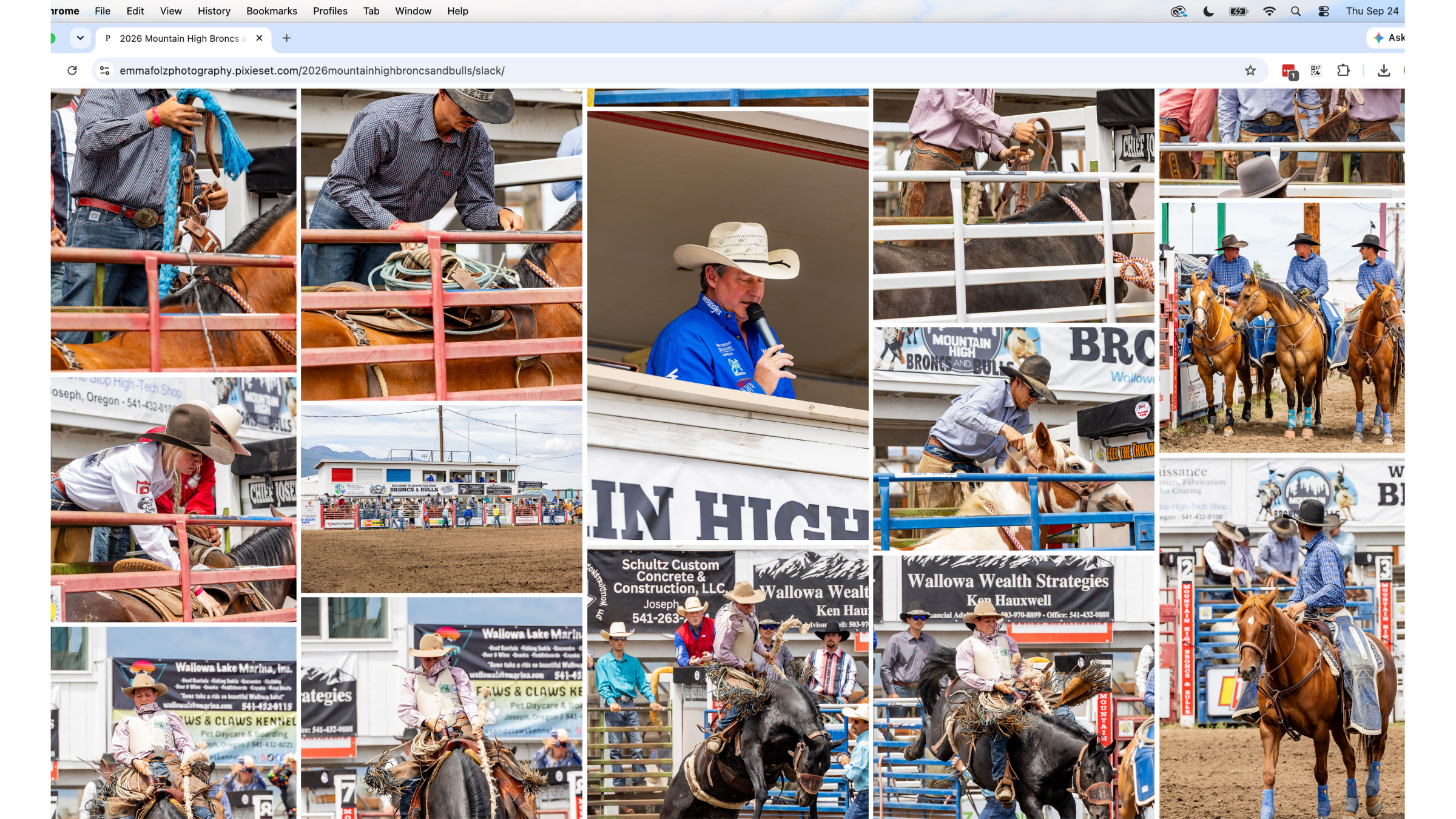
Your portfolio should make it easy for someone to imagine hiring you. It needs to show consistent rodeo work, variety across the event and strong quality in more than one lighting condition.
Keep the portfolio focused. A committee should not have to sort through unrelated portraits, filler images or long groups of nearly identical frames. Include your location or service area and make your contact information easy to find.
Want to see an example? View my professional portfolio here
Gain experience before pursuing large assignments
A paid multi-day rodeo requires more than being able to photograph one event successfully. You may need to manage long hours, difficult lighting, large file counts, travel, backups, editing deadlines and communication with multiple people.
Smaller events can help you build proof that you are ready for those responsibilities. The purpose is not to work free indefinitely. It is to develop a portfolio and process strong enough to support the opportunities you request.
Research before you reach out
Do not send the same generic message to every rodeo. Learn who organizes the event, whether it appears to have an established photographer, what kind of imagery it currently uses and what value your work could add.
This research helps you avoid contacting the wrong person, pitching an event whose needs are already filled or making a request that focuses only on what you want.
My free U.S. Rodeo Associations Directory can help you identify organizations and begin building a more intentional contact list.
Write a short useful first email
Committee members are often volunteers with limited time, so your first email should be professional, personalized and easy to understand.
Your message should briefly include:
1. Who you are and where you are based
2. Why you are contacting that specific rodeo
3. The type of photography coverage or value you offer
4. One direct link to your rodeo portfolio
5. A simple next step, such as asking whether they are reviewing photographers
Avoid sending your full life story, attaching a large group of files or asking the committee to create the job for you. Only mention experience, services and deliverables you can confidently provide.
If you want help turning these points into an effective message, my Rodeo Photographer Outreach Kit includes ready-to-customize resources created specifically for approaching rodeo committees.
Be prepared for the business conversation
Interest from a committee is only the beginning. Before accepting a job, you should be prepared to discuss:
• Dates and hours of coverage
• The moments and people that matter most
• Delivery timeline and gallery format
• Payment and travel costs
• Image usage and contestant sales
• Access, credentials and arena restrictions
• Contracts, cancellation and weather concerns
You do not need to publish your pricing online, but you do need a clear way to explain what you provide and what it costs. An agreement should protect both you and the rodeo by making expectations understandable before the event.
Deliver an experience worth repeating
The goal is not only to get hired once. Arrive prepared, follow instructions, communicate if plans change, protect the files and deliver what you promised. After delivery, make sure the committee knows how to access the gallery and use the images included in the agreement.
Rodeo communities are connected. Reliability and professionalism travel with your name just as much as the photographs do.
Turn your work into a professional offer
Strong photographs help you get noticed, but committees also need evidence that you understand the event and can make their job easier. My Beginner's Guide to Rodeo Photography covers the larger path into the industry, while the Rodeo Photographer Outreach Kit focuses on presenting yourself and approaching opportunities.
The Rodeo Photographer Starter Bundle combines the guide, presets and outreach resources for photographers building both the creative and business sides.
Frequently asked questions
Do rodeos pay photographers?
Some do, while others rely on contestant sales or use another arrangement. Payment, access, sales and image usage should be clarified before accepting the work.
Do I need to work for free first?
Free work is not automatically required, but likely a first step when entering this industry. A carefully chosen portfolio-building opportunity may be useful, but repeated unpaid coverage can quickly become unsustainable.
What if the rodeo already has a photographer?
Respect that relationship. You can introduce yourself for future consideration, but do not ask a committee to undermine an existing agreement.