Best Rodeo Photography Gear for Beginners: Cameras, Lenses, and Essentials
Best Rodeo Photography Gear for Beginners: Cameras, Lenses and Essentials
You do not need the most expensive camera system to begin photographing rodeos. You do need equipment that fits the conditions you will actually face: fast action, changing light, dust, long days and shooting positions that may be farther from the arena than expected.
The best beginner kit is not the longest shopping list. It is a dependable combination that covers the essentials and leaves room to grow.
(As an Amazon Associate I earn from qualifying purchases. I may earn a commission from eligible purchases made through links in this post at no additional cost to you.)
What matters in a rodeo camera
When comparing camera bodies, focus on the features that affect real rodeo work:
• Reliable continuous autofocus
• Usable image quality at higher ISO settings
• A fast enough burst rate for action
• A comfortable grip and controls
• Dependable battery life
• Weather resistance appropriate for outdoor use
• A lens selection that fits your budget and camera mount
Marketing numbers do not tell the entire story. A camera with more megapixels may still be less useful to you than one with stronger autofocus, better high-ISO performance or controls you can change quickly.
Both DSLR and mirrorless cameras can produce professional rodeo images. Mirrorless systems may offer newer autofocus tools and real-time exposure previews, while used DSLR equipment can provide strong value for a beginner. I personally did not switch to mirrorless until the spring of 2026, so do not overlook DSLR cameras simply because the technology is older. A dependable DSLR can still produce beautiful, professional-quality rodeo photographs.
Choose the lens before chasing accessories
Your lens determines how much of the arena you can reach and how much light you can gather. For many rodeo situations, a 70-200mm lens is a versatile starting point because it gives you framing flexibility as the action moves.
An f/2.8 version is especially helpful in dim arenas, but it usually costs more and weighs more. A slower or less expensive lens may still be a reasonable place to begin if you primarily photograph outside or have a limited budget.
Longer lenses can help when you must remain far from the action. Wider lenses are useful for atmosphere, grand entries, presentations and behind-the-scenes storytelling. Your access and arena size should guide the decision rather than a generic must-have list.
You can browse examples in my Beginner Rodeo Camera Picks. Always confirm that a lens fits your camera mount before purchasing.
Do not overlook cards batteries and storage
A camera and lens will not help if you run out of storage or power halfway through the performance. Plan for more photographs and a longer day than you expect.
Your supporting kit should include dependable memory cards that meet your camera's speed requirements, spare charged batteries and a safe way to store used cards. You will also need enough computer and drive space to manage large RAW galleries after the event.
My Photography Editing Tools list includes examples of the types of equipment that can support the editing and storage side of the job.
Pack for the environment
Rodeos can involve dust, heat, cold, rain and long periods away from your vehicle. A useful camera bag should protect your equipment, fit the way you work and remain manageable when full.
Small items can also prevent larger problems. Consider weather protection, a lens cloth, card case, battery organizer, portable charger, water, hearing protection and any venue-appropriate personal safety items.
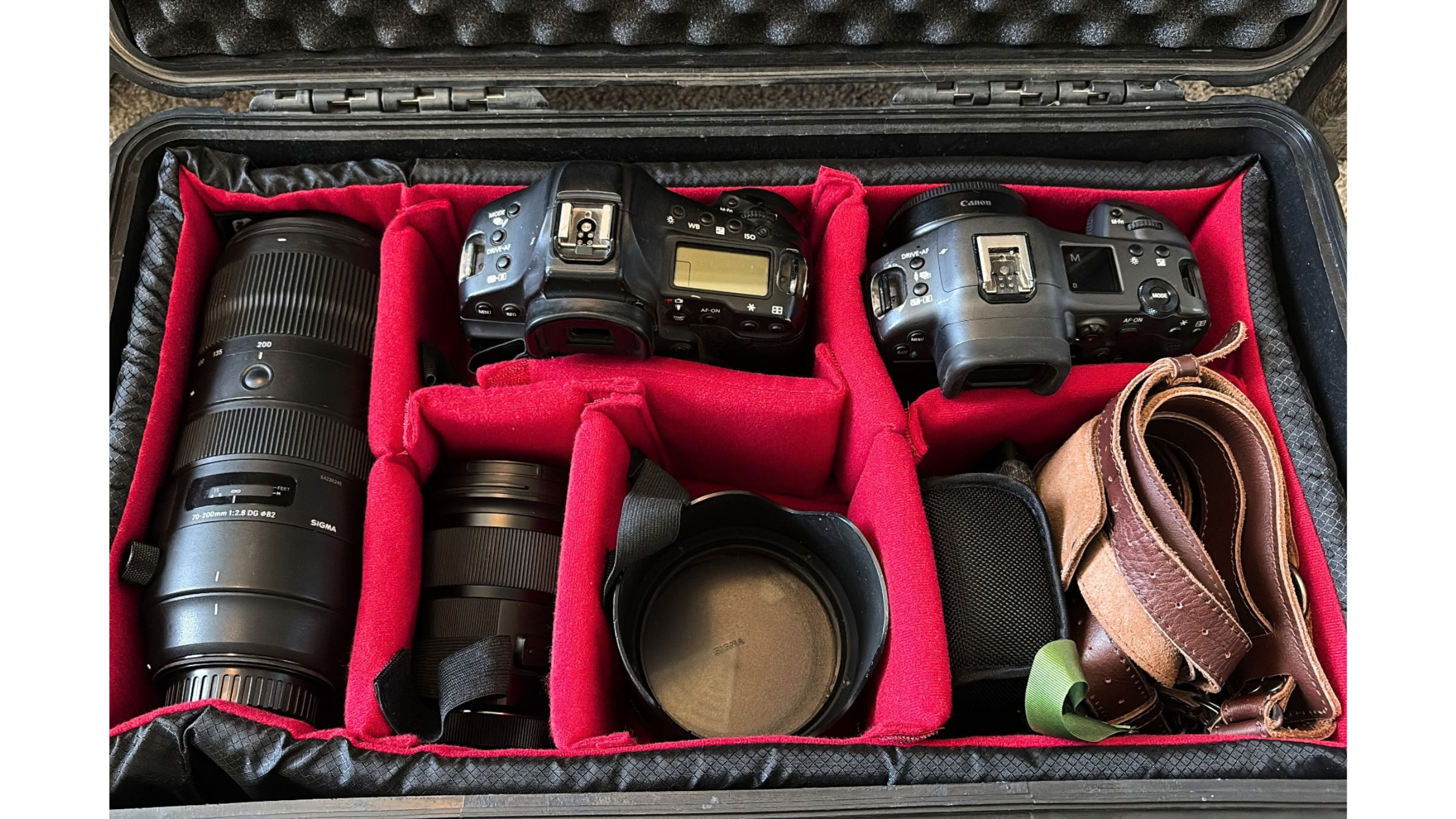
You can see the kinds of equipment I personally carry in my In My Camera Bag list.
What to buy first on a limited budget
If you are building a kit gradually, prioritize the items that most directly affect your ability to create and protect the work:
1. A dependable camera body with continuous autofocus
2. A lens with useful reach for your expected position (70-200 f/2.8 highly recommended)
3. Reliable memory cards and spare batteries
4. A protective bag and basic weather protection
5. A dependable backup and editing setup
Upgrade only after you understand what your current equipment is preventing you from doing. New gear cannot replace knowledge of the sport, safe access, good timing or consistent delivery.
Build a kit around your real needs
The right purchase depends on your camera system, budget, shooting distance, lighting and goals. My Beginner's Guide to Rodeo Photography helps connect equipment choices with the larger process of learning rodeo photography, so you can make purchases with a clearer purpose.
Frequently asked questions
Is a 70-200mm lens enough for rodeo photography?
It is versatile for many arenas and my number one recommendation when starting out, but its usefulness depends on your approved position and the size of the venue. Some situations require more reach or a wider view.
Do I need two camera bodies?
No, not when you are beginning. A second body can eventually provide backup and quicker access to another focal length, but it should not come before your essential camera, lens, power and storage needs.
Should I buy used camera equipment?
Used gear can offer excellent value when it comes from a reputable seller and you verify condition, compatibility, shutter count and return options.